A bottle of chilled Champagne or Prosecco holds several times the pressure of a car tyre, and every bit of it is pressing against that cork. Open it warm and carelessly and the cork becomes a projectile; pour it badly and the wine is flat before the starters arrive. The good news is that opening sparkling wine properly takes less than a minute and actually removes the drama. What you get instead is a soft sigh, an intact ceiling and a glass full of bubbles.
Why the cork wants out
Sparkling wine is still wine with carbon dioxide dissolved into it under pressure. Warmer liquid holds less gas, so a bottle left in a warm room has both higher internal pressure and a stronger urge to foam the moment it is opened. A well-chilled bottle is calmer in every sense: the cork eases out more slowly, the wine foams less violently and the bubbles last longer in the glass.
That is the whole logic behind everything below. Cold, grip and patience. Nothing else.
Chill the bottle properly
For most sparkling wines, aim for around 6–8°C — noticeably cold, but not painful. A richer, older vintage Champagne can take a degree or two warmer, which lets more of its aroma show. Three ways to get there:
- Fridge: the calm option. Three hours minimum for a standard 75cl bottle, overnight if you have planned ahead. This is also the safest place for a bottle that has been shaken in a bag or car boot.
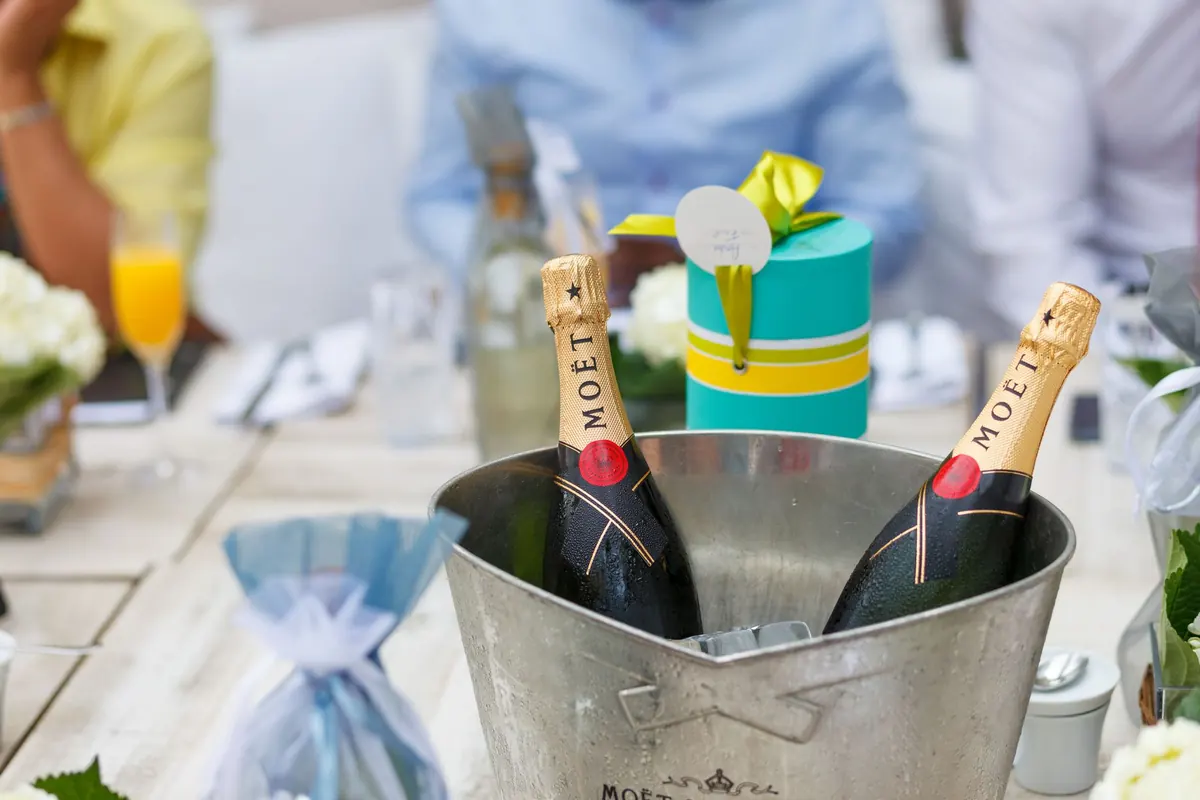
- Ice bucket: half ice, half cold water, bottle lying in it, 20–30 minutes. Water conducts heat away far better than ice alone, so it beats a bucket of cubes by a wide margin.
- Freezer: only with a timer set. Twenty minutes is plenty, and never forget it — a bottle left in the freezer can freeze, push the cork and crack.
Do not, under any circumstances, warm a bottle to make it pop harder. You are just turning a drink into a hazard.
Set up before you touch the wire
Stand the bottle on a stable surface and look around. Point the neck away from people, pets, windows and lamps, and check that nobody is standing beside or behind you — corks travel sideways as readily as forwards. Keep a clean tea towel within reach for drips and for grip. Hold the bottle at the base, never by the neck, because the neck is where the pressure is doing its work.
And never reach for a corkscrew. A sparkling bottle needs no help; forcing one in is how glass gets broken.
Loosen the cage, don't remove it
Peel away the foil and its little skirt so the wire cage is fully exposed. Keep your thumb pressed firmly on top of the cork and untwist the small wire loop — usually six twists — just enough to slacken it. Leave the cage on the cork. It costs nothing and, if the cork starts to move early, it is the only thing stopping it from leaving without you.
If you notice the cork already pressing up against the wire, that bottle is keen. Keep your thumb where it is, keep everything tilted away and go straight to the next step.
Twist the bottle, not the cork
This is the part most people get backwards. The cork should stay almost still while the bottle turns beneath it.
- Tilt the bottle to roughly 45 degrees, aiming the neck away from everyone and everything breakable.
- Drape the tea towel over the cork if your grip feels slippery from condensation.
- Grip the cork through the cage with one hand, wrapping your fingers around the top. Put your other hand on the base of the bottle.
- Turn the bottle slowly, keeping the cork as still as you can.
- As soon as you feel the cork begin to shift, slow down and ease off. Let the pressure walk it out while you keep gentle counter-pressure with your hand.
- Listen for a soft sigh rather than a bang. A bang means gas you paid for has just gone into the room.
Keep hold of the cork once it is free — it is still under pressure and can jump. If your hand slips and it goes off like a starting pistol, don't chase it; check that nobody nearby caught it.
Pour it in two stages to protect the bubbles
Tilt the glass to about 45 degrees and pour slowly down the inside wall, filling it roughly a third of the way. Pause and let the foam settle, then top up to about two-thirds, still pouring down the side rather than into the middle. Pouring straight into a dry, upright glass knocks carbon dioxide out of the wine and leaves you with a head that collapses.
Two smaller details make a real difference. Glasses straight from the dishwasher can carry a film of detergent residue, which flattens mousse — rinse and dry them properly. And with an older bottle, stop pouring before the last centimetre or so, where the sediment sits.
If you are serving a crowd, pour a round of thirds, then go back and top everyone up. It looks deliberate, and it keeps every glass lively.
The quick version, and saving the leftovers
Cold bottle, thumb on the cork, cage loosened but left on, bottle tilted away, turn the bottle not the cork, let it sigh, pour down the side in two stages. That is the whole method, and it becomes automatic after two or three bottles.
- Leftovers: a proper stainless steel stopper plus a cold fridge will hold the fizz reasonably well for a day or two.
- Skip the folklore: the old trick of standing a spoon in the neck does not keep sparkling wine fizzy, and a vacuum pump pulls out exactly the gas you are trying to keep.
- Never shake a bottle to speed up chilling, and never open one that has been rolling around in a warm car until it has rested upright in the fridge for a few hours.
Once you have the sequence down, you can open a bottle one-handed in front of guests, over a table, without anyone flinching. That quiet, unhurried pour is the whole point. The bubbles stay where they belong, in the glass.
Photo: NickyPe / Pixabay